theresa
NAD+ (nicotinamide adenine dinucleotide) is a coenzyme found in every living cell, and it acts as a shuttle for electrons, helping cells turn the food we eat into usable energy. Some labs even explore tools like NAD+ nasal spray for research to see how this molecule behaves in controlled settings. Without it, the reactions that power everything from muscle movement to brain activity would stall. Researchers also study NAD+ for its role in DNA repair, cell signaling, and how cells respond to stress, which is why it keeps turning up in labs around the world, including right here in Alberta’s growing research community.
So what are scientists actually looking at? Mostly how NAD+ levels shift across cell types and conditions, and what that tells us about energy production at the cellular level. Think of it as curiosity-driven science, the kind Edmonton has long been proud to support.
In this article, we’ll break down what NAD+ is, how it works inside the cell step by step, and what researchers are exploring next. No lab coat required.
What NAD+ Means in Plain Language

NAD+ is short for nicotinamide adenine dinucleotide. It’s a helper molecule, called a coenzyme, found in every living cell, and it plays a big part in how cells handle energy.
Picture a reusable shuttle bus looping around Edmonton. It picks up passengers at one stop, drops them off at another, then heads back empty to start again. NAD+ works a lot like that bus. The passengers are tiny charged particles called electrons, released when a cell breaks down the food we eat. When NAD+ picks up electrons, it becomes NADH. When NADH drops them off, it turns back into NAD+, ready for another trip. That back-and-forth pairing is the heart of the story.
Here’s a quick glossary to keep the terms straight:
- NAD+
- The “empty” shuttle form of the molecule, ready to pick up electrons during energy-making reactions.
- NADH
- The “loaded” form of the shuttle, carrying electrons it collected from broken-down nutrients.
- Coenzyme
- A helper molecule that works alongside enzymes so chemical reactions in the cell can happen.
- Metabolism
- All the chemical reactions a cell uses to turn food into energy and building materials.
- Mitochondria
- The cell’s power stations, where much of its usable energy is produced.
Why does any of this matter? Every tissue in your body runs on energy. Muscles need it to move you along a river valley trail, and your brain needs a steady supply just to think, remember and focus. Because NAD+ sits at the center of how cells turn fuel into energy, researchers keep a close eye on it.
How NAD+ Helps Cells Make Energy
The NAD+ and NADH Cycle
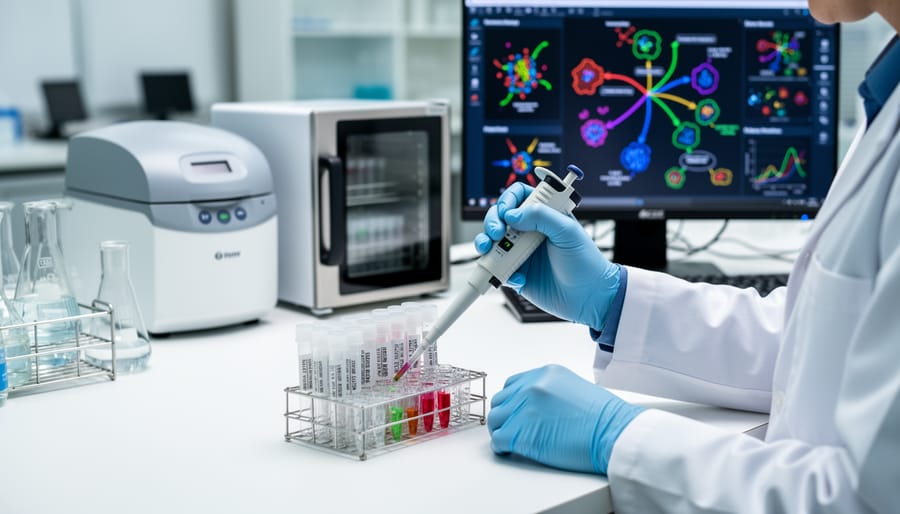
Think of NAD+ and NADH as two sides of one reusable shuttle. When cells break down nutrients, NAD+ picks up electrons and becomes NADH. That’s the first half of the loop, and it’s a big part of how food fuels you at the cellular level, since the energy locked in a meal gets handed off to these carriers.
The second half is just as important. NADH delivers its electrons to the mitochondria, drops them off, and turns back into NAD+. Now the shuttle is empty and ready for another trip. Without that return, the whole system would stall, because many of the early energy-releasing steps need NAD+ to keep going.
This is why researchers care about the balance between the two forms. Cells don’t just want a lot of NAD+ or a lot of NADH. They want a healthy ratio, with enough NAD+ available to accept electrons and enough conversion back so the loop never jams. Scientists often measure that ratio as a window into how well a cell is managing its energy, though what the numbers mean in a living person is still being worked out.
Where the Mitochondria Come In
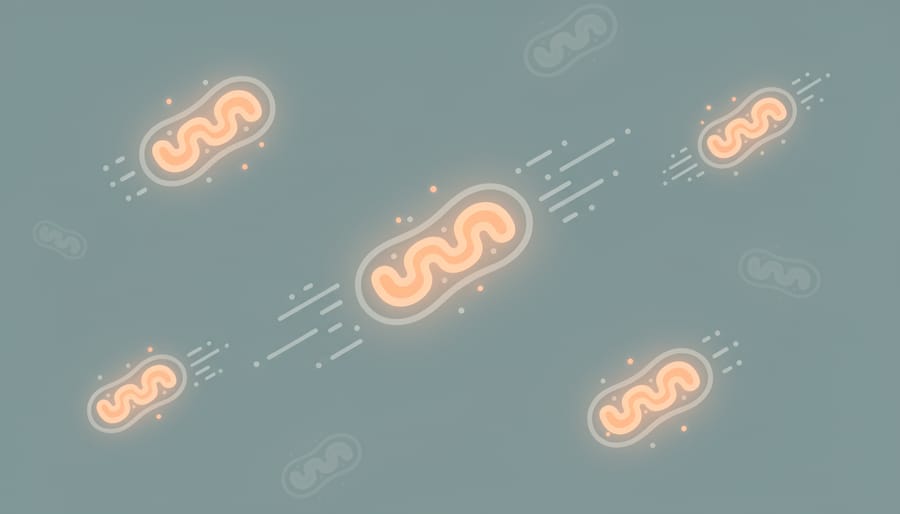
Think of mitochondria as the cell’s power stations. Tucked inside nearly every cell in your body, these tiny structures take the raw fuel from the food you eat and turn it into ATP, the energy currency cells spend on everything from contracting a muscle to firing a neuron. Cells that work hardest, like those in your heart, muscles, and brain, tend to pack in the most mitochondria.
So where does NAD+ fit in? Earlier steps of breaking down nutrients leave NAD+ holding a load of electrons, and in that form it becomes NADH. NADH carries those electrons to the mitochondria and hands them off to a chain of proteins. As the electrons move along that chain, their energy is used to help build ATP. Once NADH drops off its cargo, it turns back into NAD+ and heads out to pick up another load.
It’s a bit like a shuttle running between a busy downtown and the power plant, delivering energy and returning empty for the next trip. Researchers are curious about how well this handoff keeps up over time, which is one reason NAD+ and mitochondrial function show up together so often in studies.
More Than Energy: Other Jobs NAD+ Does in the Cell
NAD+ doesn’t just sit at the center of energy production. Scientists also study it as a fuel for certain enzymes that help cells monitor and look after themselves. Think of it like a city utility that powers the streetlights and the snowplows alike: the same supply, several different jobs.
Here’s a quick overview of the main NAD+-related activities researchers examine:
- Energy production: NAD+ shuttles electrons so cells can turn nutrients into ATP.
- Enzyme signalling: certain enzymes use NAD+ to switch cell processes on or off.
- DNA repair: some NAD+-dependent proteins respond when genetic material is damaged.
- Cell stress responses: NAD+ availability may shape how cells cope with strain.
Two enzyme families get much of the attention. Sirtuins use NAD+ to adjust other proteins, and researchers are exploring how this connects to metabolism, cell maintenance and the way genes are regulated. PARPs (poly ADP-ribose polymerases) also consume NAD+, and they’re best known for their role in detecting and responding to DNA damage. Because both families draw on the same NAD+ pool, scientists are curious about how cells balance those demands.
It’s worth keeping the framing honest, though. These are active research areas, not finished stories. Much of what we know comes from lab and animal studies, and the picture in people is still taking shape. That’s a big part of what makes the field so interesting to follow.
What Researchers Study and How the Research Is Used
So what do scientists actually do with all this? Mostly, they ask questions, and plenty of them are still open.
One big area is aging. Researchers have looked at whether NAD+ levels shift as organisms get older, and what that might mean for how cells handle energy and repair themselves. Another is metabolism and mitochondrial function: how steady NAD+ supplies connect to the way mitochondria turn nutrients into ATP, and what happens in tissues that demand a lot of energy, like muscle and brain.
Different kinds of studies each add a piece of the puzzle. Lab work on cells lets scientists watch individual pathways up close and test one variable at a time. Animal studies show how those pathways behave inside a whole living body, with all its interacting systems. Human studies are where the picture gets tested against real people, and they’re often smaller, shorter, or harder to control. Each layer has limits, which is exactly why researchers lean on all three.
That’s the part worth holding onto. A result in a dish of cells or in mice doesn’t automatically carry over to people, and plenty of promising early findings have needed far more testing before anyone could say much about them. The field is still moving, and today’s understanding may look different in a few years.
It’s a nice bit of local pride that Edmonton has a strong research community behind this kind of curiosity-driven science. If you’re keen to see how the city’s academic side shapes the place, take a look at the University of Alberta research story for a sense of the campus at the heart of it all.
Common Questions About NAD+ and Cellular Energy
What does NAD+ stand for, and is it the same as NADH?
NAD+ stands for nicotinamide adenine dinucleotide. NADH is its partner form, so they’re two versions of one shuttle: NAD+ picks up electrons to become NADH, then drops them off and turns back into NAD+.
Does the body make its own NAD+?
Yes. Cells build and recycle NAD+ through several pathways, which is why it’s present in every living cell.
Why do researchers link NAD+ to aging?
Scientists are studying whether NAD+ levels shift as organisms age and how that connects to metabolism and mitochondrial function. It’s an active area of research, and findings from cells or animals don’t automatically apply to people.
Should I talk to a health professional before trying supplements?
Absolutely. This article is for understanding the science, not for personal health decisions, so a doctor or pharmacist is the right person to ask about your situation.
Those answers cover the basics, but the bigger takeaway is that this field is still unfolding. Researchers across the world, including the strong university community right here in Edmonton, keep refining what we know about how cells manage energy. If a question keeps nagging at you, that curiosity is a great place to start.
NAD+ may be a tiny molecule, but it plays a big part in how our cells turn food into the energy that gets us through everything from a river valley walk to a long winter day. Researchers are still piecing together the full story, and that’s part of what makes the topic so fascinating. Stay curious, keep asking questions, and take in some of the science and community events happening around Edmonton. And if you have personal questions about your own health, a chat with a health professional is always the best next step.